
Resin flooring
in Leicester
Leicester made its name in hosiery and knitwear, and today its food producers and small factories need floors that are hygienic and safe underfoot.
Leicestershire
Industrial and polyurethane floors in Leicester
Leicester grew as a centre of hosiery and knitwear, and many of its red brick factories still stand along the River Soar, the canal and around the centre. Some are now flats or offices, while others hold clothing workshops and light industry. Food manufacturing is an important industry in Leicester and Leicestershire, and the M1 and M69 link the city with the rest of the Midlands.
An epoxy floor or a polyurethane floor is poured as one seamless surface onto concrete or screed that has been ground, primed and levelled. The industrial flooring page covers systems for production and storage. An enquiry from Leicester, Loughborough or Hinckley is handed on to a flooring company in the East Midlands, which comes out for a site survey if the job requires it, prepares the quote and does the work.
We also take enquiries from the surrounding area, for example from Loughborough, Hinckley, Oadby, Wigston and Market Harborough.
Who carries out the work?
We pass your enquiry on to a partner flooring company in your area, which prepares the quote and carries out the work. We’ll let you know whether we have a partner for you.
Food factories and former textile mills
In food production the floor is washed down every day, often with strong cleaning agents. Hygienic flooring for the food industry has no joints, so it can be cleaned and disinfected thoroughly; HACCP itself is the food safety system of the business, not a label the floor carries. A former hosiery building now packing food or clothing may still have a worn slab, which is ground back to sound concrete first. Around washing points, anti-slip flooring with quartz sand gives a firmer footing.
Terraced houses and garages around the city
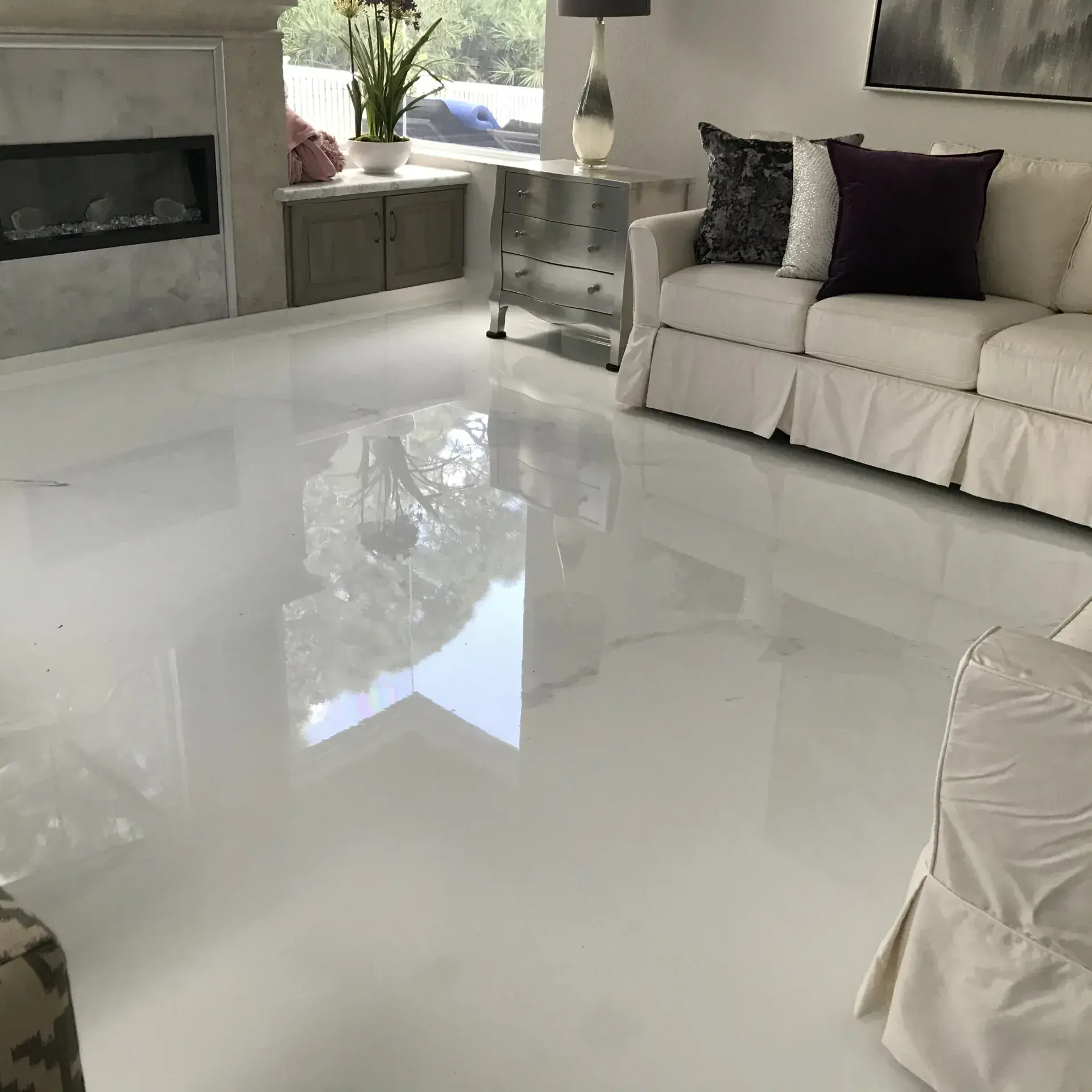
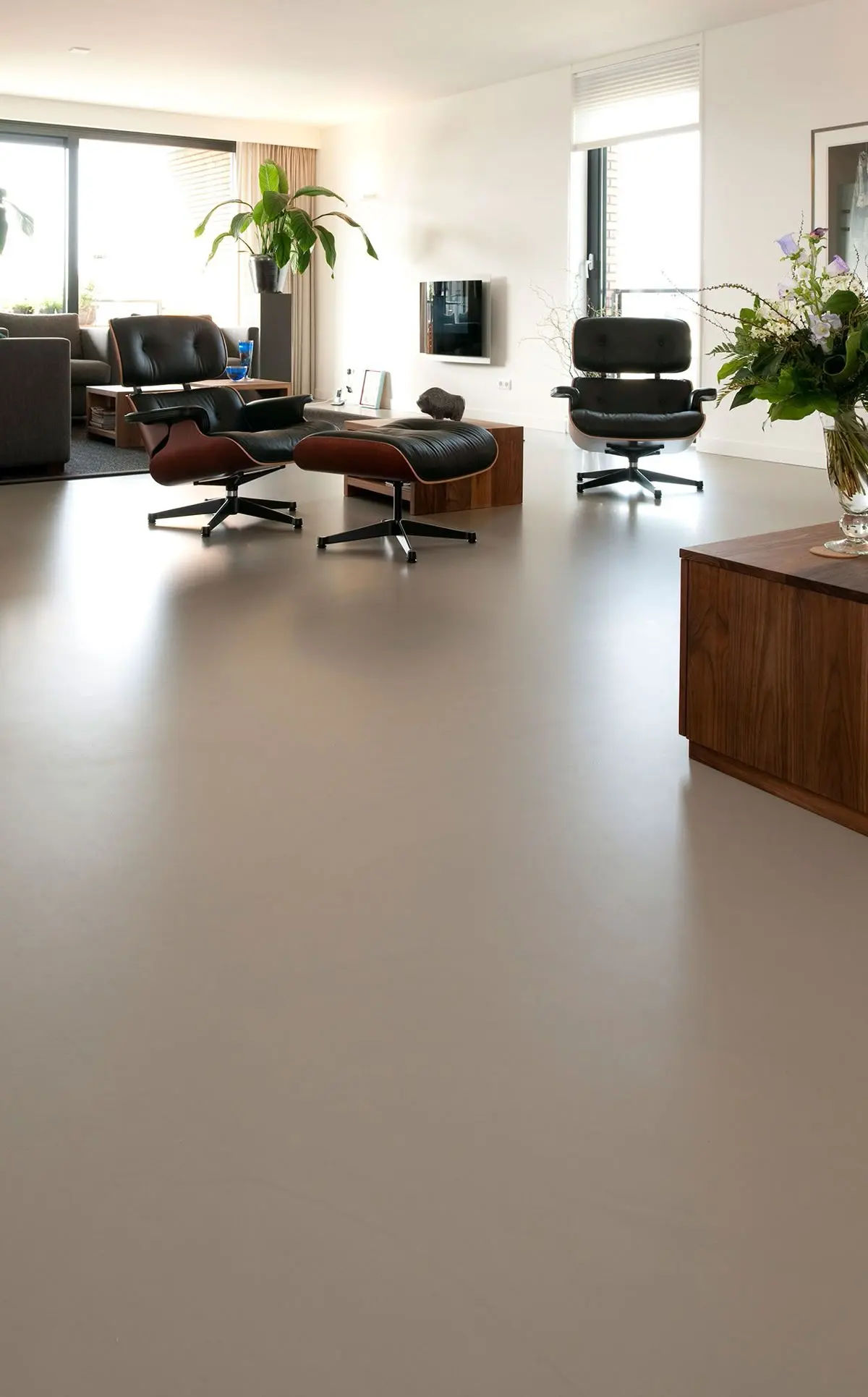
Victorian and Edwardian terraced streets run through Clarendon Park, Westcotes and Highfields, and semi-detached houses in places such as Oadby and Wigston often have a garage beside them. Inside the home, polyurethane is the material to use, as it is more flexible than epoxy and copes better with daylight. The garage is where epoxy fits: on a ground and primed slab with a quartz sand broadcast it stops dust, and oil or salt can be wiped off.
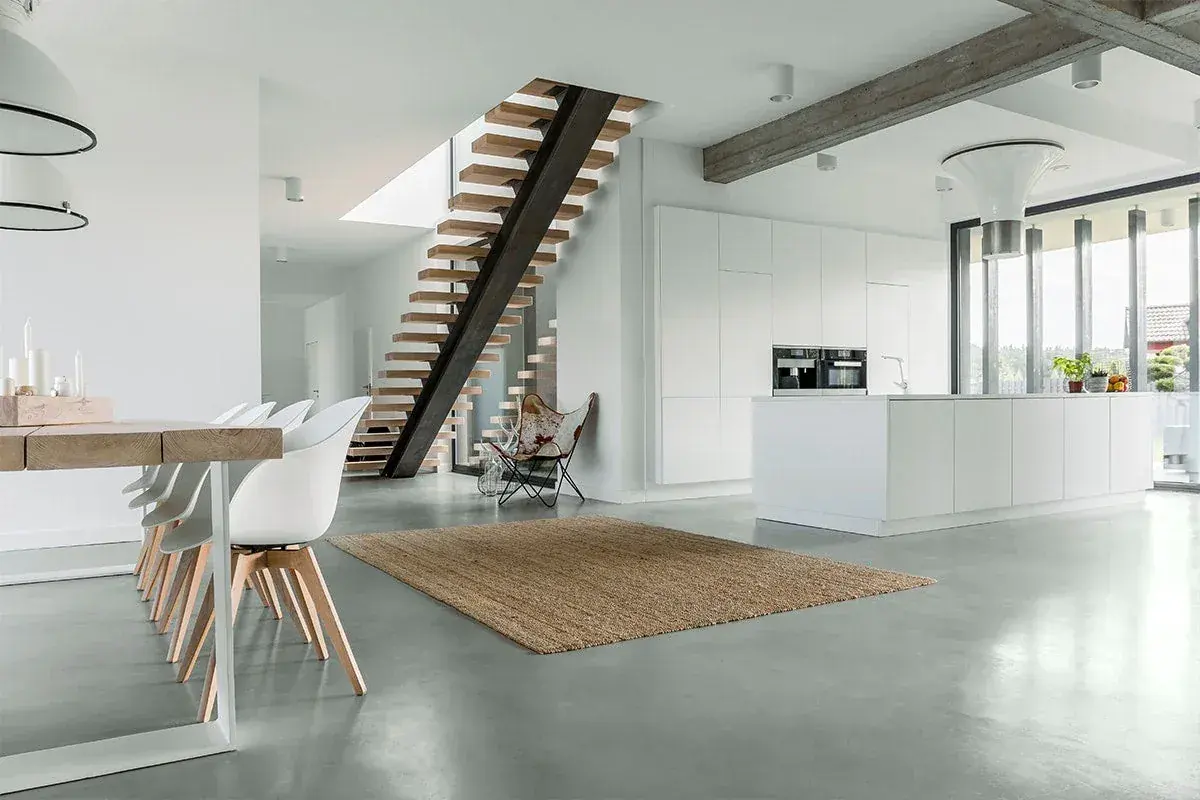
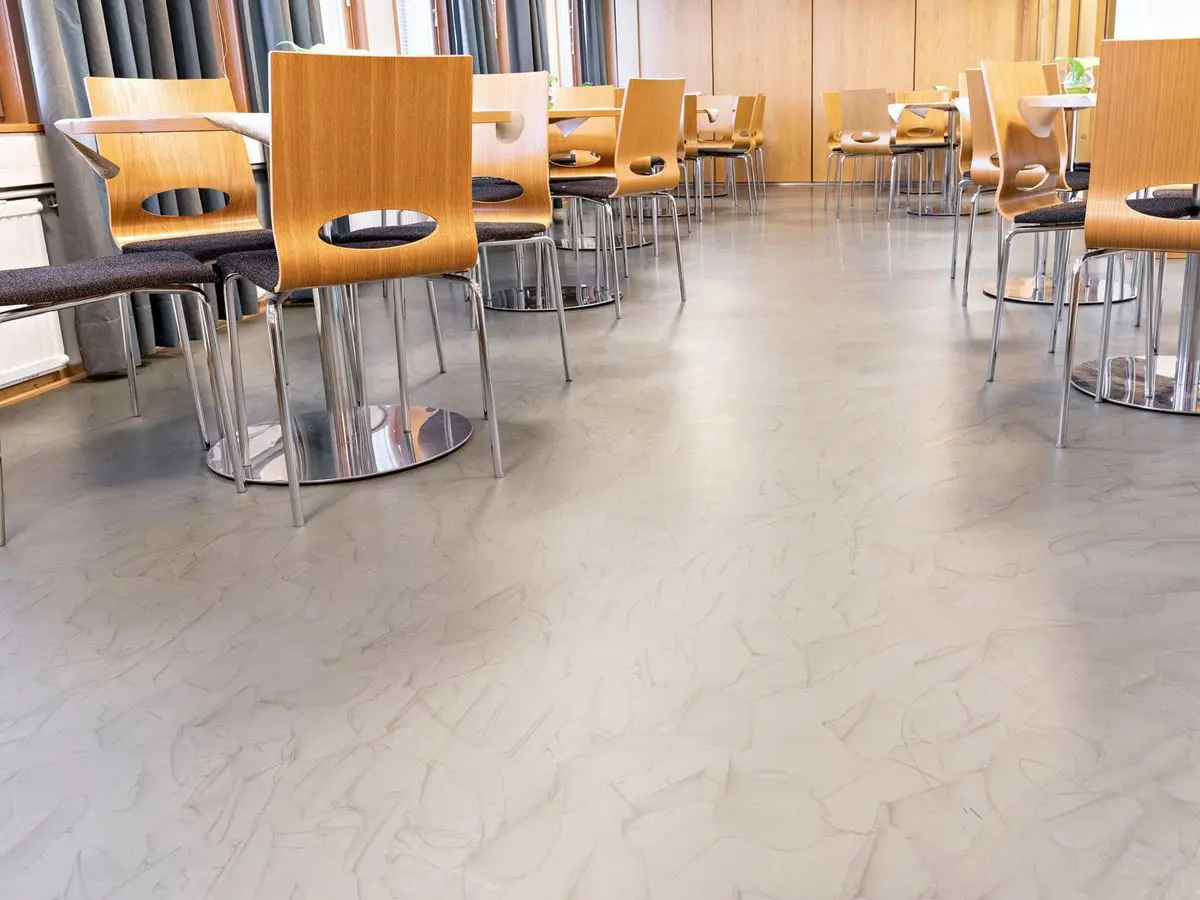



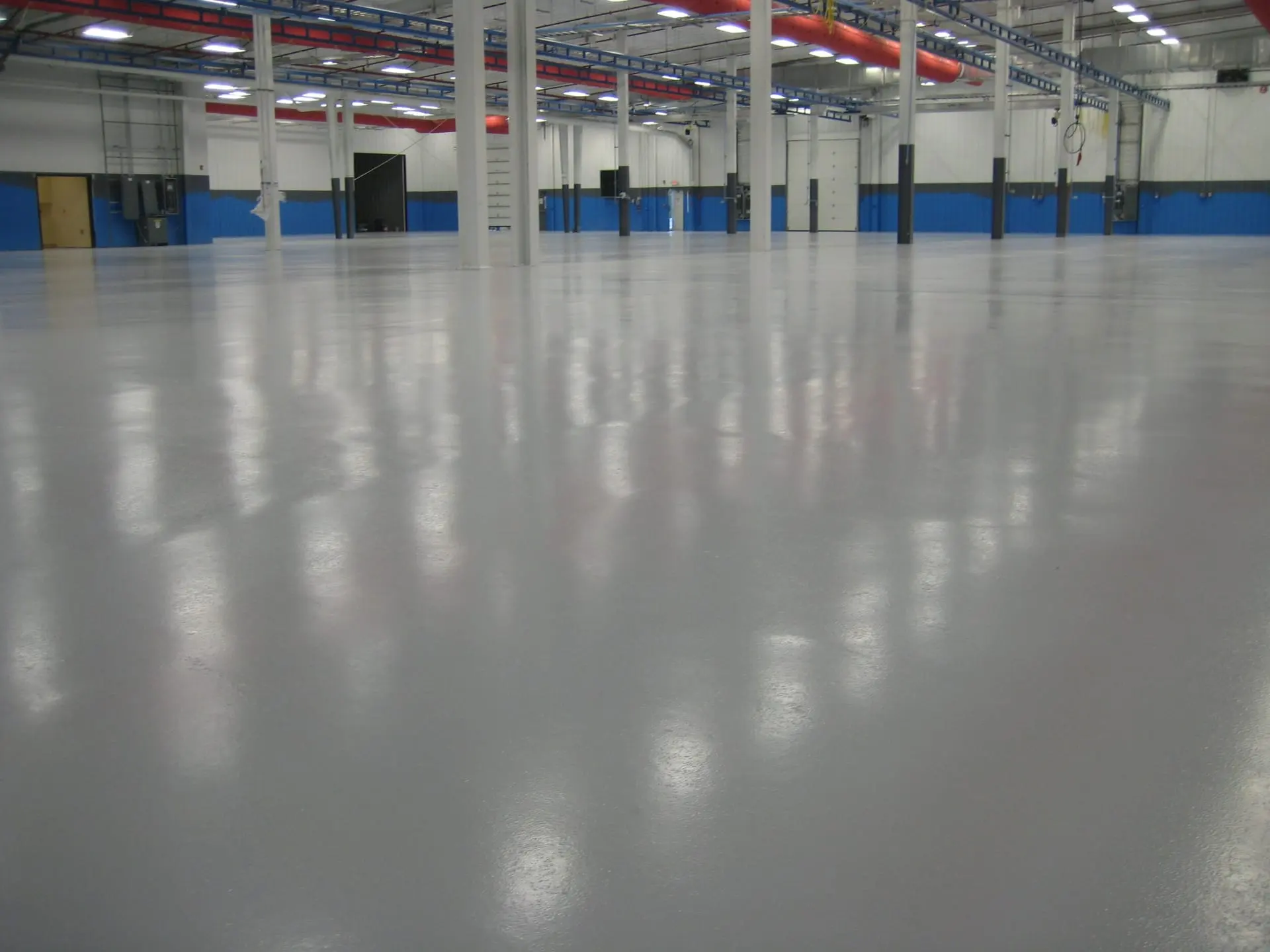
Real experiences.
Frequently asked questions about resin flooring in Leicester
Can resin flooring go over the old quarry tiles in a Leicester terrace?
Only if the tiles are still firmly bonded. Every area is tapped to find hollow spots, and loose or cracked tiles are lifted and the gaps filled before the surface is ground for the primer. Where too many are loose, it is simpler to take them all up and lay a new screed.
Is there a way to learn resin flooring from Leicester and turn it into a business?
Yes, through the online course in epoxy and resin flooring, which you can follow from Leicester at your own pace. It is written mainly for people who want poured floors to become their trade, not for a one-off job at home.
What is the difference between epoxy and polyurethane on a Leicester factory floor?
Epoxy suits most production and storage areas with forklifts and chemicals. Polyurethane is more flexible, and polyurethane concrete handles hot water and sudden temperature changes, so it goes into the washdown zones of food plants. Some systems combine the two with a quartz sand broadcast.
Resin flooring in other towns and cities
London Manchester Newcastle upon Tyne Birmingham Glasgow Liverpool Bristol Nottingham Leeds Belfast York Hull See all towns and cities
Planning a resin floor in Leicester?
Tell us the floor area, the substrate and what the space is used for. We pass your enquiry on to a flooring company in your area and let you know whether we have a partner for you.