
Resin flooring
in Stoke-on-Trent
The Potteries still make ceramics while old pot banks find new uses, so Stoke floors run from wet clay rooms to terraced front rooms.
Staffordshire
Industrial and polyurethane floors in Stoke-on-Trent
Stoke-on-Trent is the city of the Potteries, formed from six towns: Tunstall, Burslem, Hanley, Stoke, Fenton and Longton. Ceramics are still made here, and brick bottle kilns survive among the streets, while some former pottery works now house studios and small businesses. With the M6 to the west and the A50 heading east, the city has also attracted warehousing and distribution.
Every resin floor starts with the base: concrete or screed is diamond ground, cracks are repaired, a primer goes on and, if needed, a levelling layer follows. We hand on requests from Stoke-on-Trent and Newcastle-under-Lyme to a Staffordshire flooring company, which arranges a site survey if one is needed, then sets out a quote and lays the floor. You can send the floor area and a short description through the enquiry form.
We also take enquiries from the surrounding area, for example from Newcastle-under-Lyme, Kidsgrove, Stone, Leek and Stafford.
Who carries out the work?
We pass your enquiry on to a partner flooring company in your area, which prepares the quote and carries out the work. We’ll let you know whether we have a partner for you.
Ceramics works, old pot banks and A50 warehouses
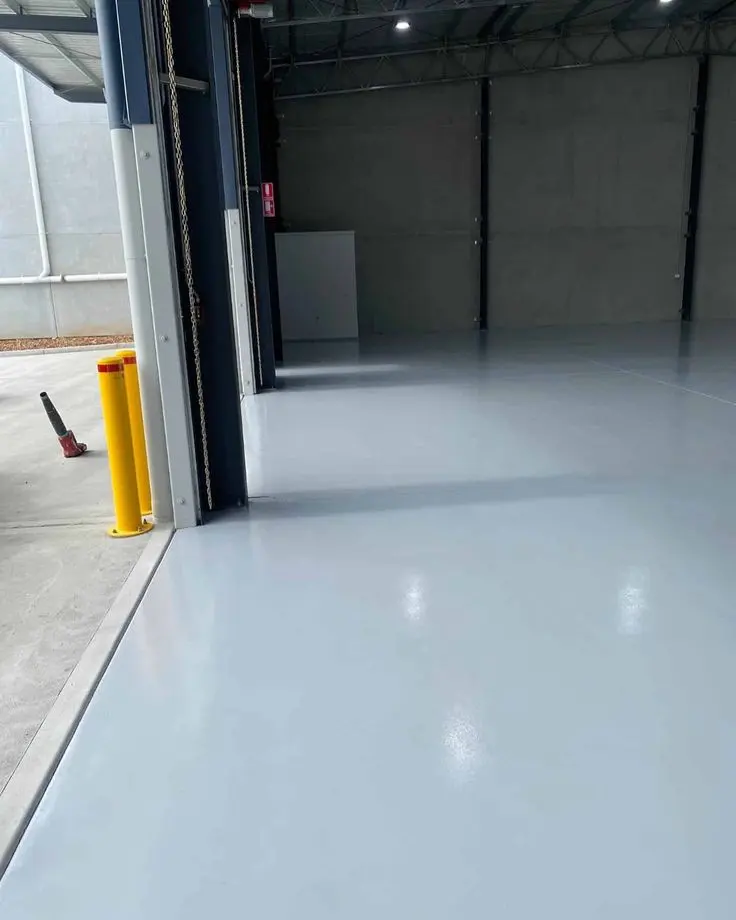
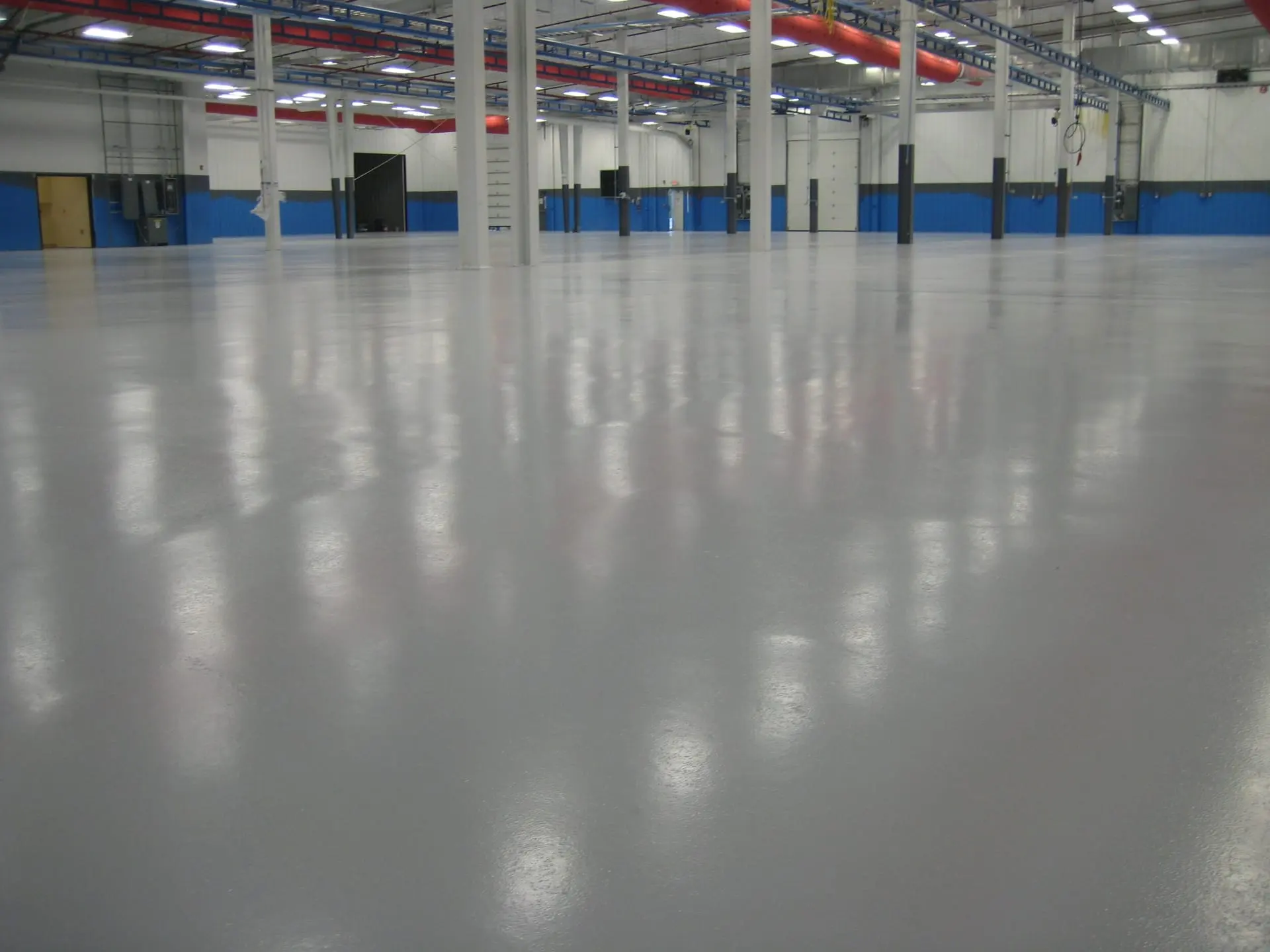
Where clay, liquid slip and glaze are handled, the floor gets wet and dusty, so it has to wash down easily and stay safe underfoot. An anti-slip floor with a quartz sand broadcast gives grip there. Former pot banks reused as workshops often have old, patched concrete, ground back to a sound surface before priming. In a distribution warehouse near the A50 or the M6, a factory and warehouse floor in epoxy or polyurethane takes forklift trucks and heavy racking.
Terraced houses in Burslem, Hanley and Longton
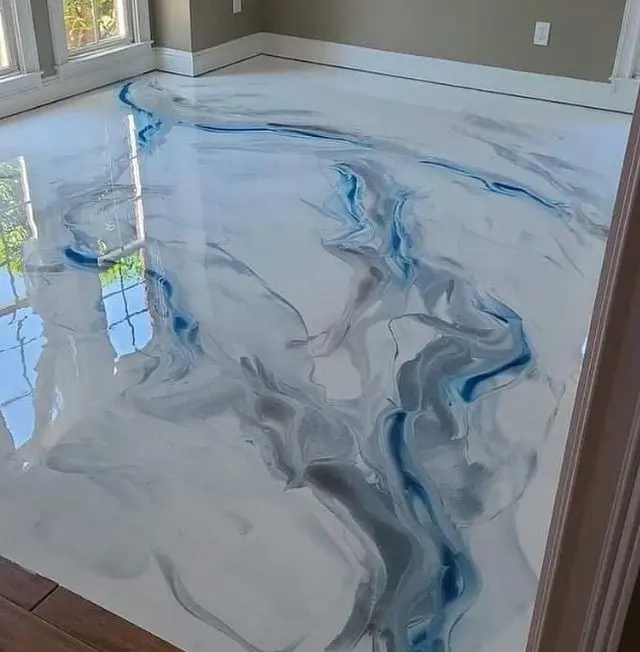
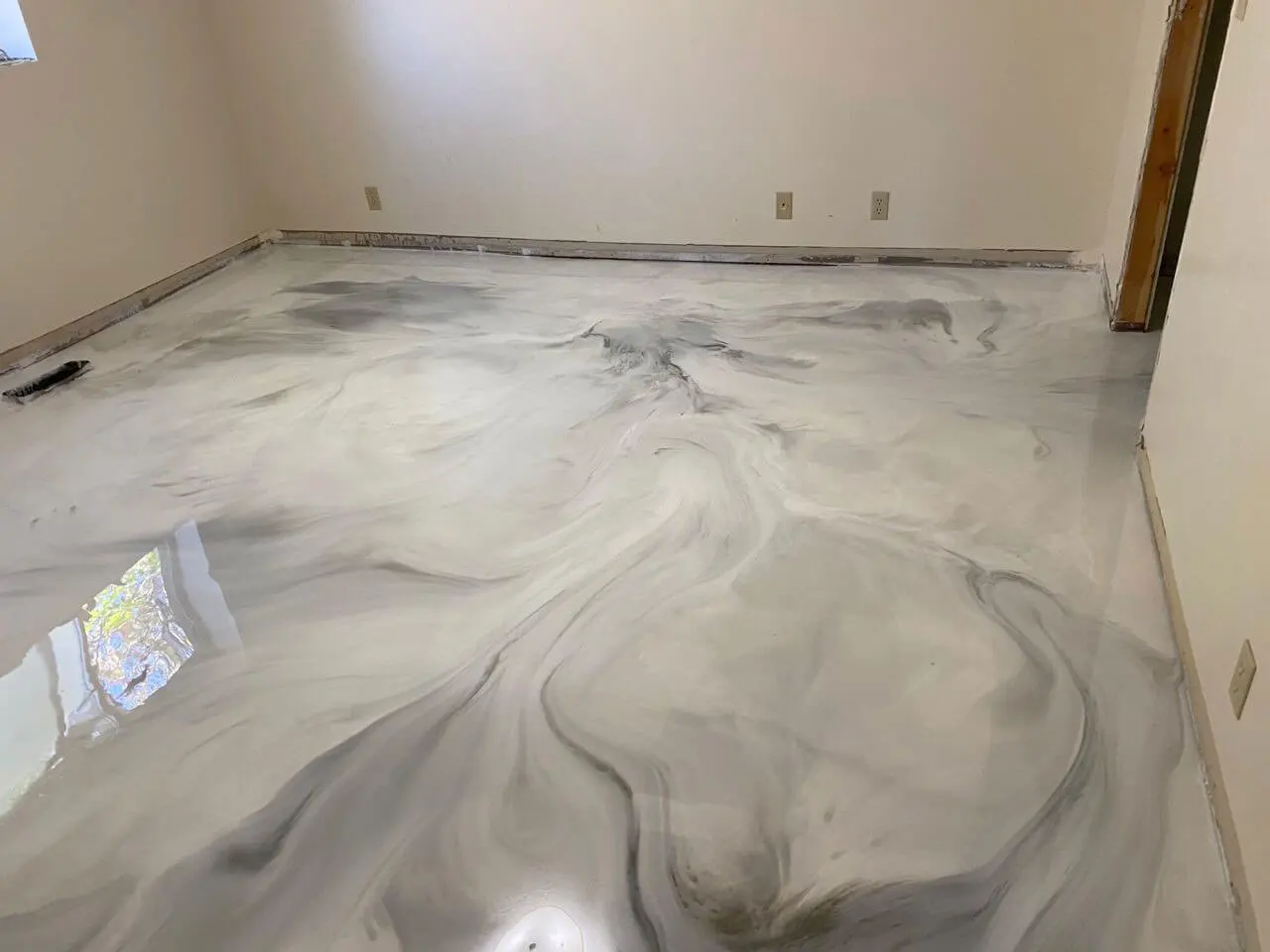
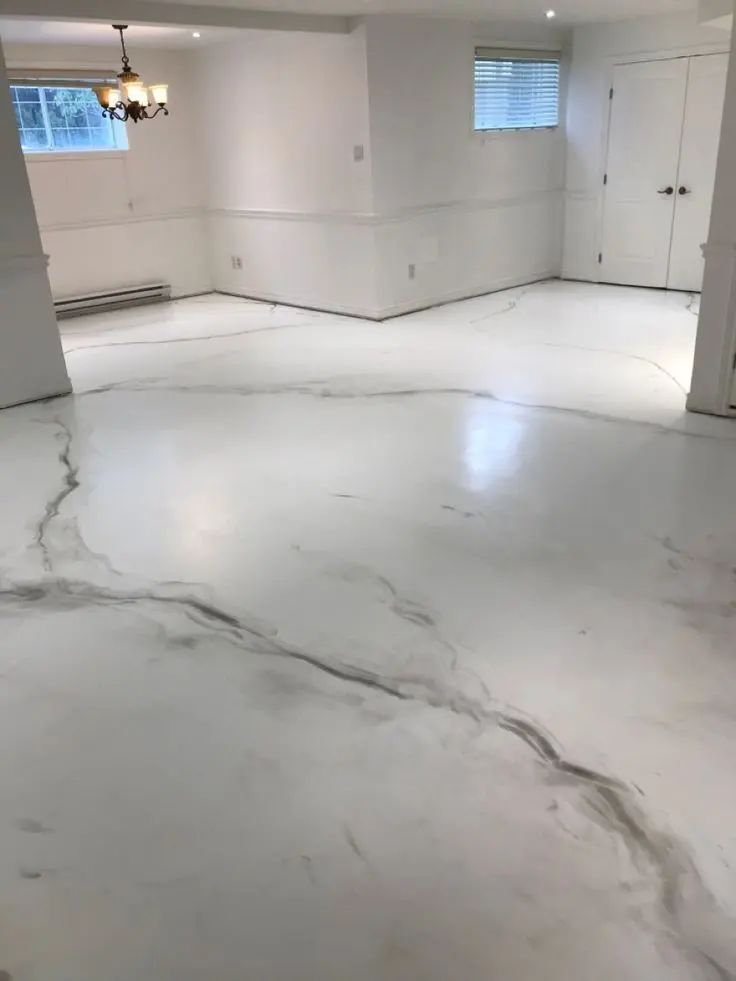
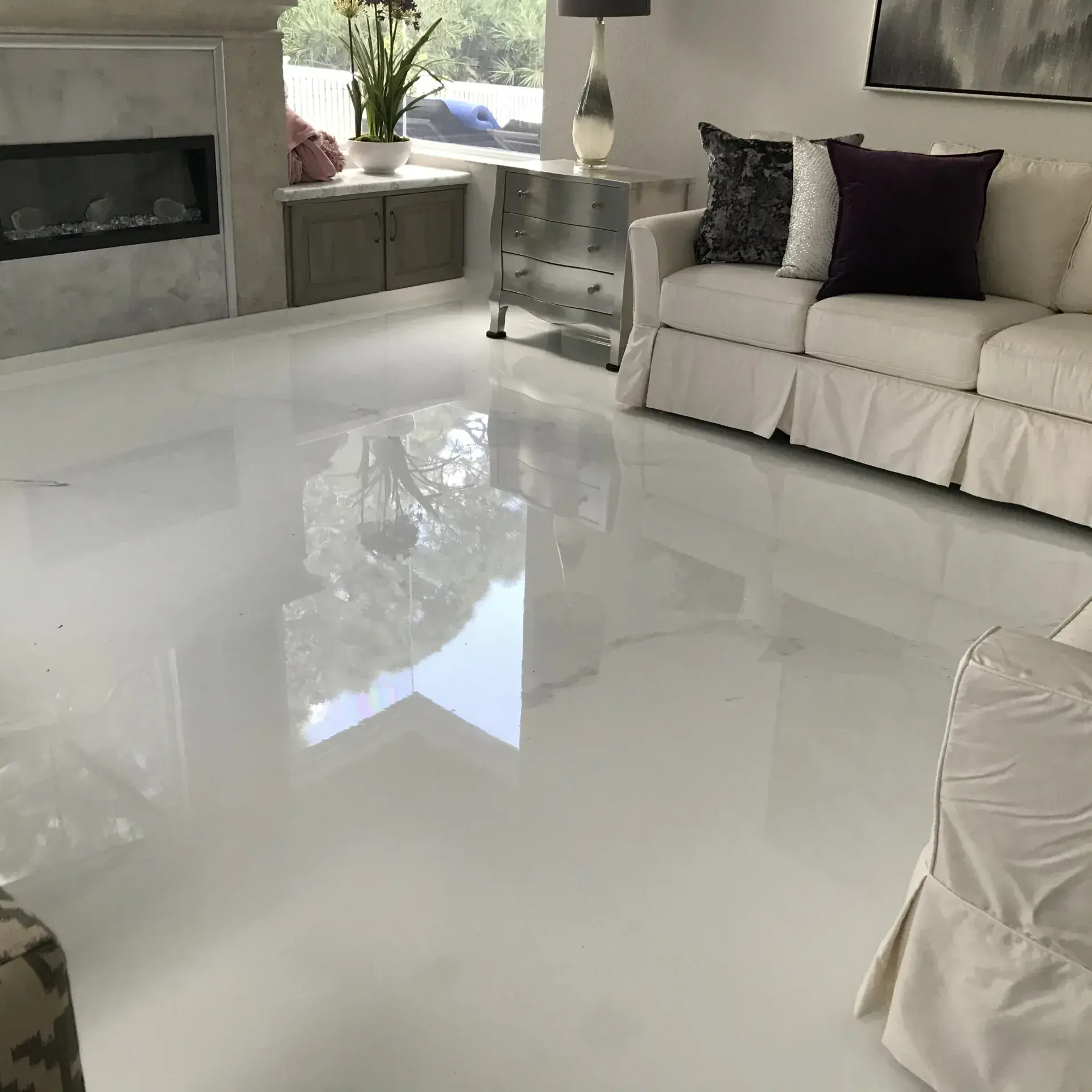
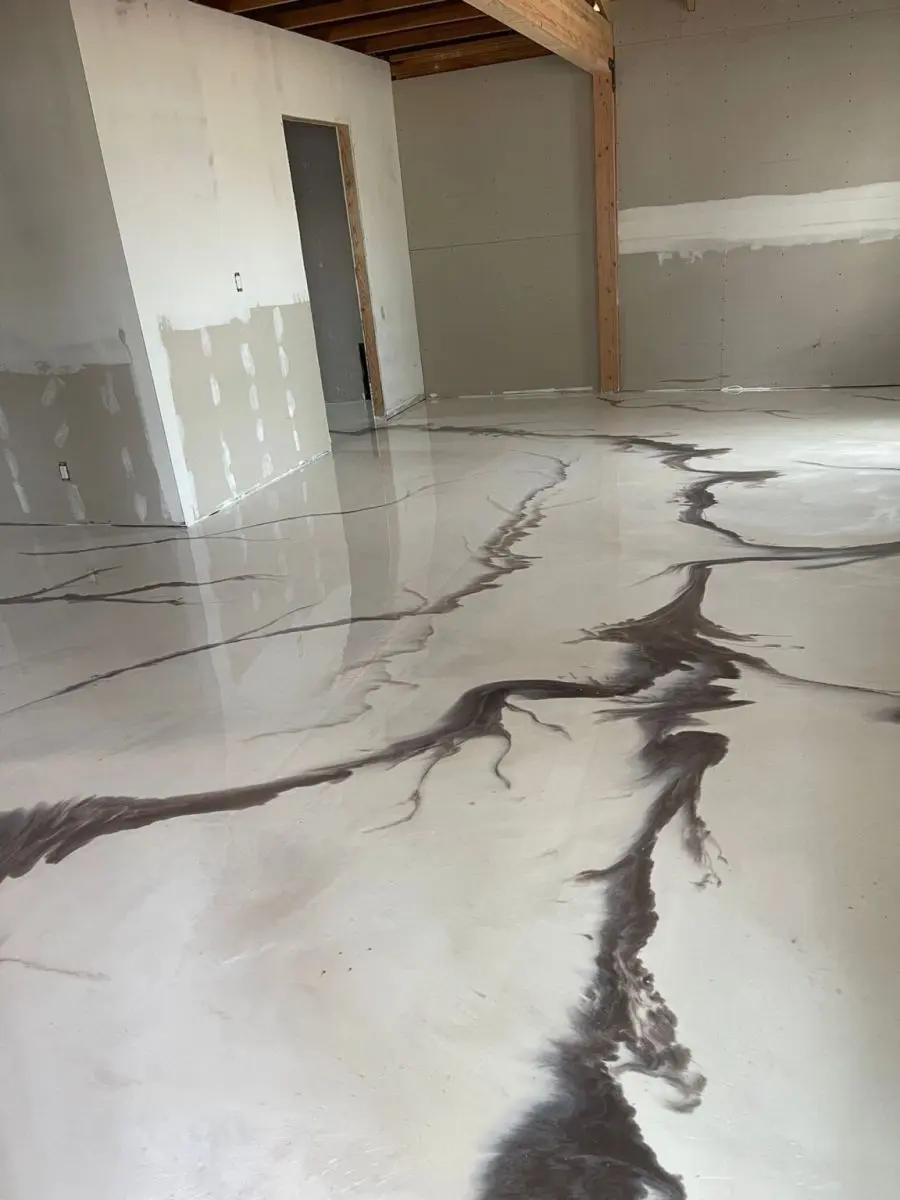
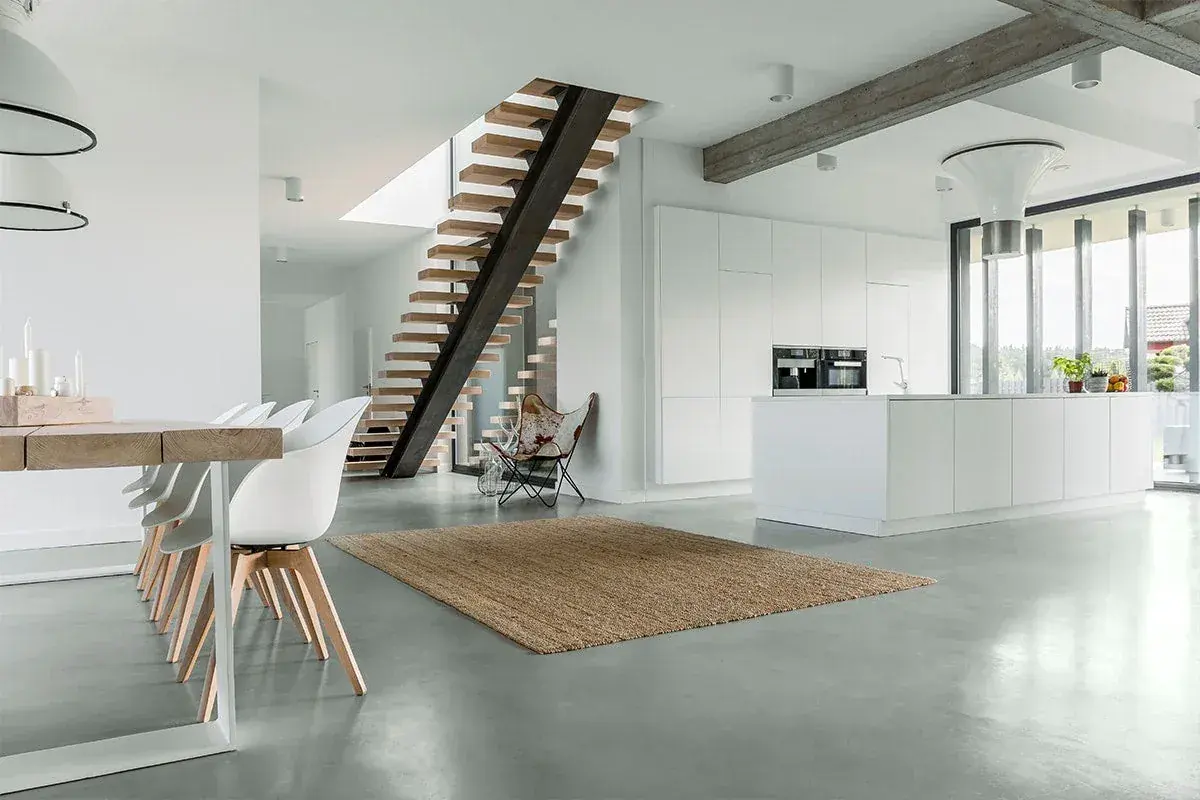
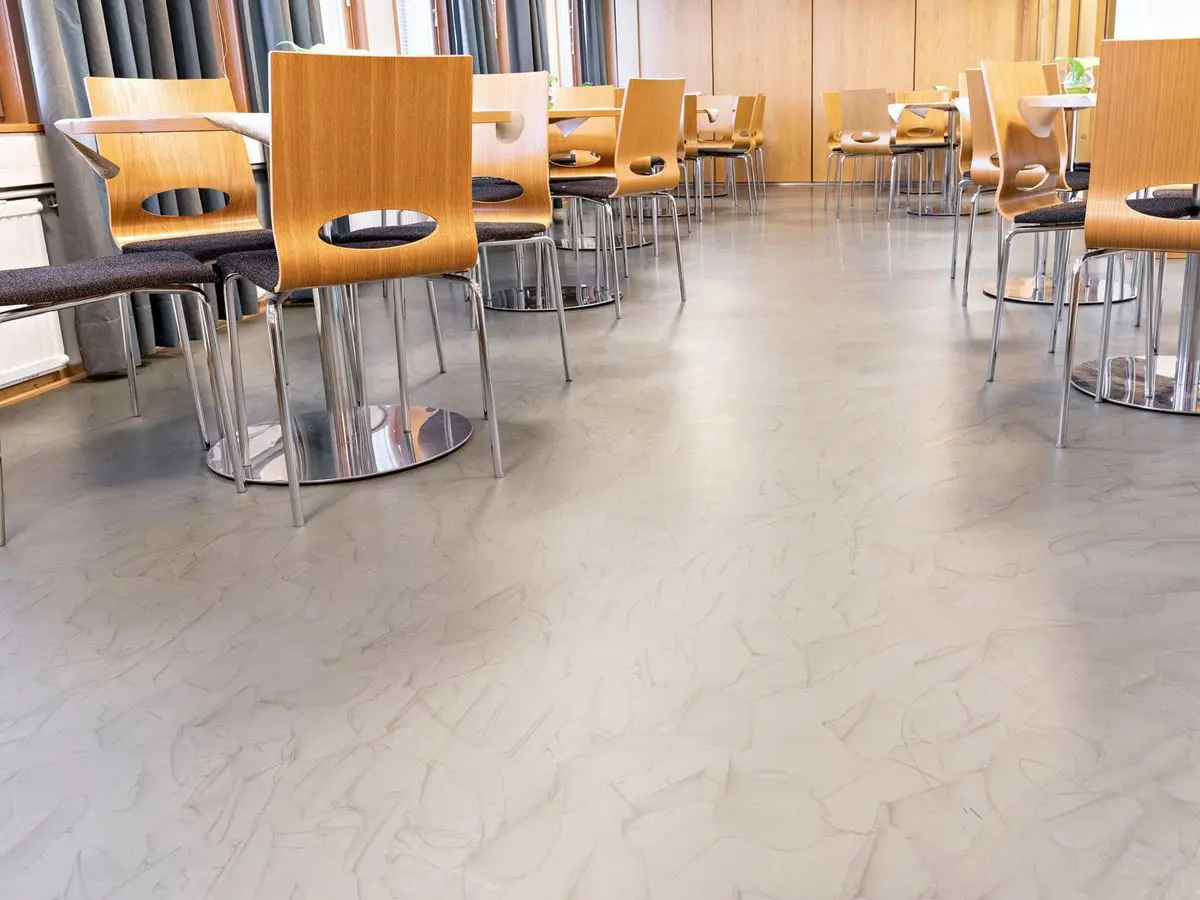
Brick terraced houses fill many streets in Burslem, Hanley, Longton and the other towns, often with two rooms downstairs and a small kitchen at the back. Polyurethane suits living space, being more flexible than epoxy and better with UV. For a kitchen, a marble-effect floor is veined by hand and every one comes out different, which suits a city that knows about glaze and decoration. Hollow screed is cut out and the base levelled first.



Real experiences.
Frequently asked questions about resin flooring in Stoke-on-Trent
What floor suits a small pottery studio or craft workshop in Stoke?
One with no joints, so clay dust and dried slip can be swept and washed off without catching in grout lines. A plain epoxy floor such as a solid-colour floor gives an even surface in matt or gloss, and around sinks and potter’s wheels it can be roughened for grip.
Why can two warehouse floors of the same size near the M6 get different quotes?
Because area is only part of the price. How worn the current slab is, which system goes on and how thick it is built up all change the work involved, and oil stains, cracks or old paint add preparation. The page on industrial flooring price per m² goes through each factor.
Which resin floor gives a terraced front room in Stoke the look of bare concrete?
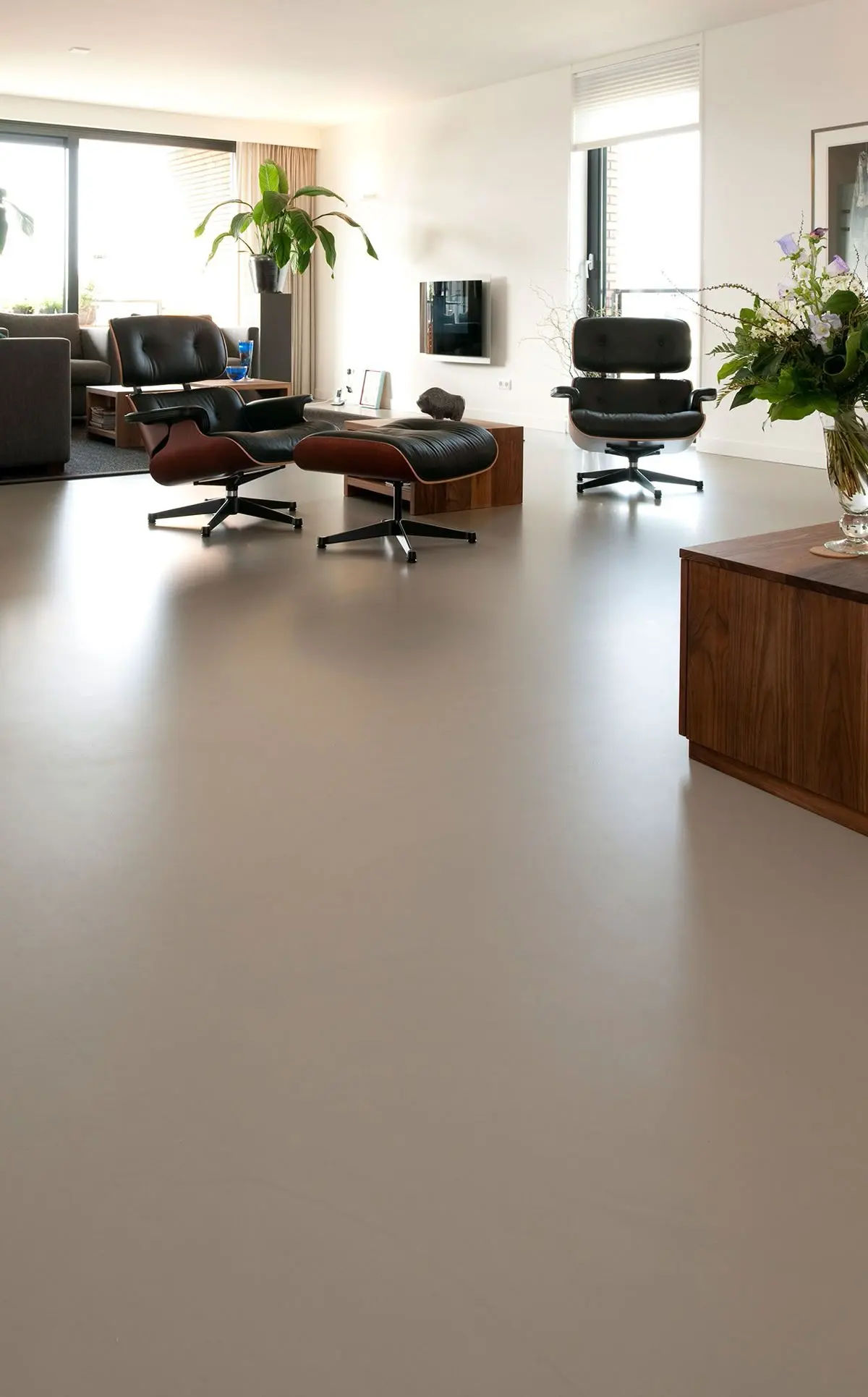
A concrete-look floor in polyurethane has the appearance of fair-faced concrete, but without joints, pores or dust. Being polyurethane, it is more flexible than epoxy and at home in a living room. Like any resin floor, it needs a dry, sound base under it.
Resin flooring in other towns and cities
London Manchester Newcastle upon Tyne Birmingham Glasgow Liverpool Bristol Leicester Nottingham Leeds Belfast York See all towns and cities
Planning a resin floor in Stoke-on-Trent?
Tell us the floor area, the substrate and what the space is used for. We pass your enquiry on to a flooring company in your area and let you know whether we have a partner for you.